




















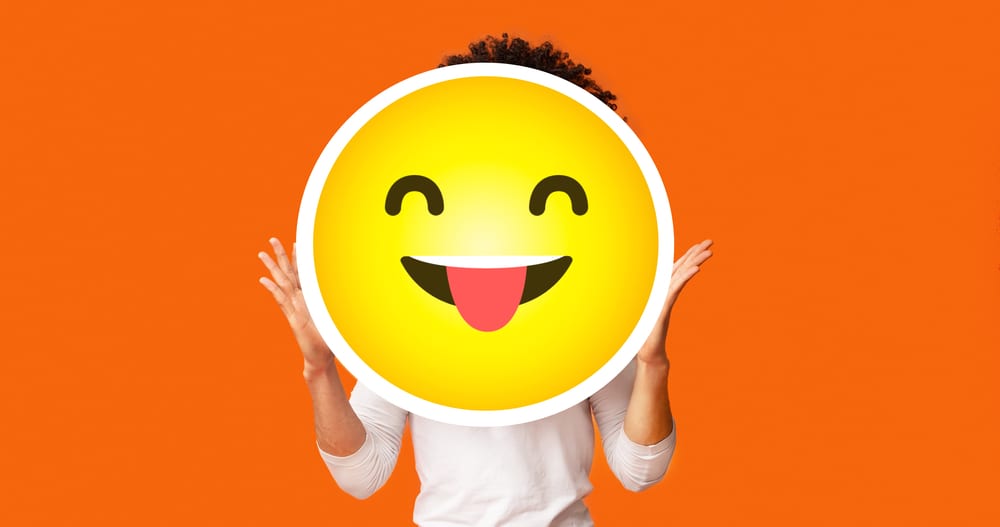
The simple yellow smiley face has long been a staple of digital communication, acting as a universal sign of friendliness and approval. However, for parents communicating with Gen Z children, that innocent icon might be sending a message they never intended. To a teenager or young adult, the standard smiley face (🙂) often carries a heavy layer of irony, sarcasm, or even coldness.
The Rise of Digital Sarcasm
While older generations view the smiley face as a direct expression of happiness, Gen Z has repurposed it as a tool for passive-aggression. Because the emoji features a static, unblinking expression, it often feels “forced” or “fake” to younger users. In their digital lexicon, a smiley face doesn’t always mean “I’m happy”; it frequently translates to “I’m annoyed but pretending I’m not” or “I am being dismissive.”
This shift in meaning isn’t just a trend; it has been documented in various social interactions, from cheerleading squads to corporate internships. In many cases, young people report feeling a sense of “digital dread” when they see the icon from an older contact, forcing them to pause and consider if the sender is actually upset with them.
Why Gen Z Sees It Differently
This generational divide often stems from what could be called the “uncanny valley” of digital expressions. To a teen, the standard smiley face looks slightly ominous—its eyes are wide and its smile is thin. When a parent sends it, they might mean “Great job!” but the teen reads it as a cold “Whatever.”
This is similar to the “thumbs up” (👍) emoji, which Gen Z frequently interprets as a “low-effort” response that signals a lack of interest or a “good for you (not really)” sentiment. Because Gen Z grew up with these icons as a primary form of communication, they have developed a hyper-sensitivity to the visual “tone” of an emoji, much like how previous generations developed a sensitivity to a person’s tone of voice.
The Evolution of the Emoji Dictionary
The way we use emojis has expanded significantly since Apple first brought them to a global audience in 2011. With nearly 4,000 icons now available, younger users have developed a complex shorthand that functions like a second language. This evolution means that the “literal” meaning of an emoji is often the least important part of the message.
For instance, the “Skull” (💀) has largely replaced the traditional crying-laughing face for many young people, signaling that they are “dead” with laughter. Meanwhile, the “Fire” (🔥) emoji remains a badge of coolness, and the “Loudly Crying Face” (😭) is frequently used to express overwhelming joy or being “obsessed” with something, rather than actual sadness.
Bridging the Communication Gap
For parents, the goal isn’t necessarily to start using teen slang—which can often come across as forced or “cringe”—but to be aware of the “tone of voice” their texts carry. Misunderstandings often arise because text lacks the vocal inflection and facial expressions of in-person talks.
If you find your teen reacting strangely to your messages, it might be time to swap the standard smiley for the “Smiling Face with Smiling Eyes” (😊) or the “Grinning Face” (😀), which tend to feel more genuinely warm and less ambiguous. Understanding these nuances doesn’t just prevent arguments; it helps maintain a sense of connection in a world where a single icon can change the entire meaning of a sentence.
Conclusion: Navigating the Modern Digital Landscape
Navigating the world of digital parenting requires a bit of translation. As language evolves, so do the symbols we use to express it. By understanding that a simple emoji can have a double meaning, parents can avoid unnecessary friction and ensure their messages of support are received exactly how they were intended. The key is to remain curious rather than frustrated; after all, every generation has its own “secret” language—this one just happens to be written in pixels.