
















Anyone who has parented an active child knows the inevitable sound of a thud followed by a momentary silence and then a cry. Our family’s introduction to these “learning moments” intensified when we started practicing Jujutsu. While the martial art taught my children discipline and coordination, the reality of wooden swords, mats, and grappling meant that bruises and minor sprains became part of our weekly routine.
It was during this time that our Sensei introduced us to a traditional remedy that has since become a cornerstone of our home first-aid kit. Known in Asian martial arts circles as Dit Da Jow—which translates to “hit wine medicine”—this herbal tincture is a powerhouse for anyone dealing with the physical toll of an active lifestyle.
What is Dit Da Jow?
Dit Da Jow is a topical analgesic liniment with deep roots in Traditional Chinese Medicine (TCM). Historically, martial arts masters would craft their own proprietary blends to treat “iron palm” training injuries or combat wounds. The core purpose of the formula is to move “Qi” and blood, which in modern terms means stimulating circulation to reduce stasis and inflammation.
By increasing blood flow to a localized area, the liniment helps the body dissipate bruising (pooled blood) and brings fresh nutrients to damaged tissue. While it is a staple for martial artists, its applications for general muscle soreness, the dull ache of rheumatism, or the swelling from a twisted ankle make it a versatile tool for any parent’s medicine cabinet.
Dit Da Jow Recipes
If you search for authentic Dit Da Jow recipes, you will quickly find that many are “closed” formulas, passed down through lineages of practitioners. Furthermore, many traditional recipes require rare Chinese herbs that can be difficult for the average person in the West to source or identify.
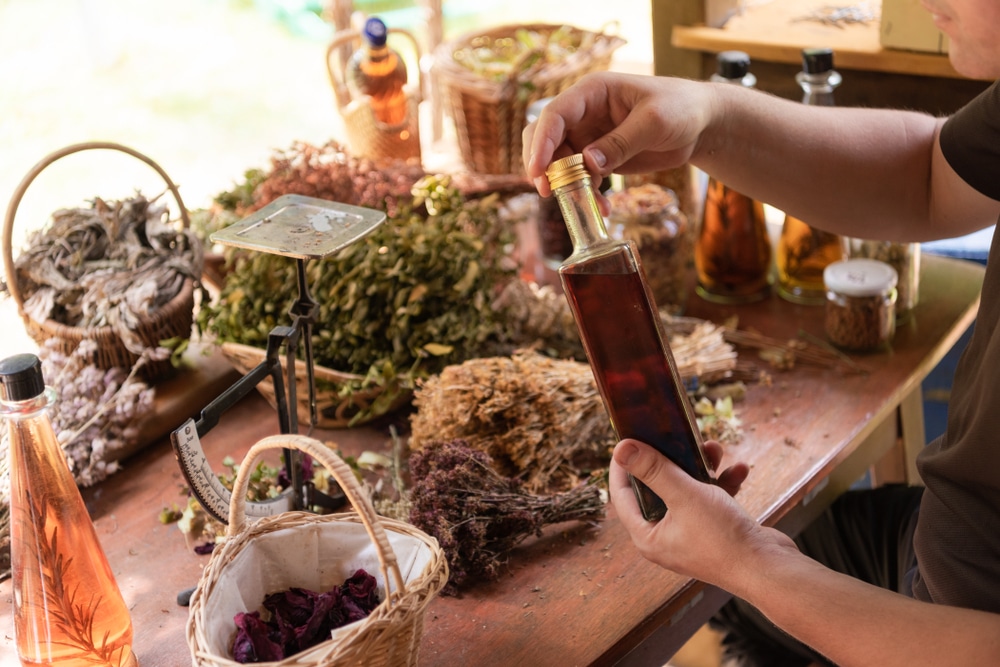
To make this accessible for my family, I adapted a recipe that utilizes the principles of “hit medicine” but incorporates Western herbs that offer comparable healing properties. This “Westernized” version maintains the spirit of the original by focusing on anti-inflammatory and vulnerary (wound-healing) plants. While it may lack some of the exotic resins of a 500-year-old temple recipe, its effectiveness on our family’s bumps and bruises has been undeniable. It is an excellent example of how we can bridge ancient wisdom with the botanicals available in our own backyards.
The Benefits of Dit Da Jow
The true strength of a liniment lies in its synergy. By combining various herbs, you address the multiple stages of an injury—from the initial swelling to the long-term tissue repair. Here is a breakdown of the ingredients I find most effective for a family-friendly blend:
- Arnica: Perhaps the most famous herb for trauma, it is unparalleled for reducing the appearance of bruises and easing the pain of impact.
- Plantain leaf: Often dismissed as a weed, plantain is a cooling herb that draws out heat and soothes skin irritation.
- Comfrey leaf: Known as “boneknit,” it contains allantoin, a compound that speeds up cell proliferation and supports the repair of connective tissues and bones.
- Frankincense & Myrrh: These ancient resins are powerful anti-inflammatories that help move stagnant blood and provide significant pain relief for deep muscle aches.
- Fennel: Helps to move “dampness” and tension out of the muscles while boosting local circulation.
- Angelica Root: A warming herb that is particularly good for joint discomfort and encouraging blood flow to cold, stiff areas.
- Calendula: This gentle flower is a master at skin repair, ensuring that the area around a bruise stays healthy and resilient.
- Dandelion root: Aids in clearing metabolic waste from the site of an injury by supporting local detoxification.
- Horsetail: High in silica, this herb is essential for strengthening ligaments and tendons that may have been overstretched.
- Nettle leaf: Provides a mineral boost to the tissues, helping to nourish the area while fighting systemic inflammation.
- Clove: Acts as a natural numbing agent, providing a slight warming sensation that interrupts pain signals.
- Turmeric: A heavy hitter for inflammation, turmeric helps prevent the “throbbing” sensation often associated with fresh injuries.
How Does Herbal Liniment Work?
The “magic” of a liniment is actually basic chemistry. By macerating herbs in high-proof alcohol, we extract the volatile oils, alkaloids, and resins that water alone couldn’t pull out. When you apply this liquid to the skin, the alcohol evaporates quickly, acting as a “carrier” that pulls the herbal constituents deep into the dermis and underlying muscle tissue.
This transdermal delivery is much faster than taking an oral supplement. It is important to remember that because of the high alcohol content and the specific herbs used (like Comfrey and Arnica), this is strictly for external use. It should never be ingested, and it should not be applied to open wounds or broken skin, as the alcohol will sting and certain herbs are not meant to enter the bloodstream directly.
Dit Da Jow Muscle Liniment Recipe
Creating your own liniment is a lesson in patience, but the result is a potent remedy that lasts for years.
Preparation Time: 5 minutes
Steeping Time: 42 days (minimum)
- Gather your dried herbs and place them into a 16-ounce glass mason jar. You want the jar to be about 1/3 to 1/2 full of dried herbal material.
- Pour food-grade alcohol (80-proof vodka or gin works well) over the herbs, filling the jar to the top. Stir thoroughly to ensure no air bubbles are trapped.
- Seal the jar tightly. Place it in a dark, cool cupboard. Shake the jar daily for the first few weeks to keep the extraction process active. While you can use it after 21 days, waiting 6 weeks (42 days) results in a much stronger liniment.
- Once ready, strain the liquid through a fine cheesecloth. Squeeze the cloth to get every last drop of the potent “hit wine.”
- Store the finished tincture in dark glass dropper bottles to protect it from light degradation.
Parental Note: Always test a small patch of skin first to ensure no sensitivities exist. If you are pregnant or nursing, consult with a professional, as certain herbs like Myrrh are often avoided during pregnancy.
Shelf Life and Storage
One of the fascinating aspects of Dit Da Jow is that it behaves much like a fine balsamic vinegar or wine—it often improves with age. While a six-week steep is sufficient for household use, some practitioners let their “master batch” sit for years, occasionally adding more alcohol or herbs to the “mother” jar.
If you decide to keep the herbs in the jar while using the liquid, simply ensure the plant material is always completely submerged in alcohol to prevent mold. For most families, straining the batch after six weeks and storing it in a cool, dark place is the most practical route. Because the alcohol acts as a preservative, the shelf life is virtually indefinite, making it a reliable partner for your family’s journey through sports, play, and everything in between.
As we raise our children to be resilient and active, having a natural way to support their recovery is incredibly empowering. Whether it’s a sore muscle from a soccer game or a bruise from a martial arts class, this traditional “hit medicine” provides a bridge back to play. We would love to hear from you—what are the go-to herbal remedies in your family’s first-aid kit?