




















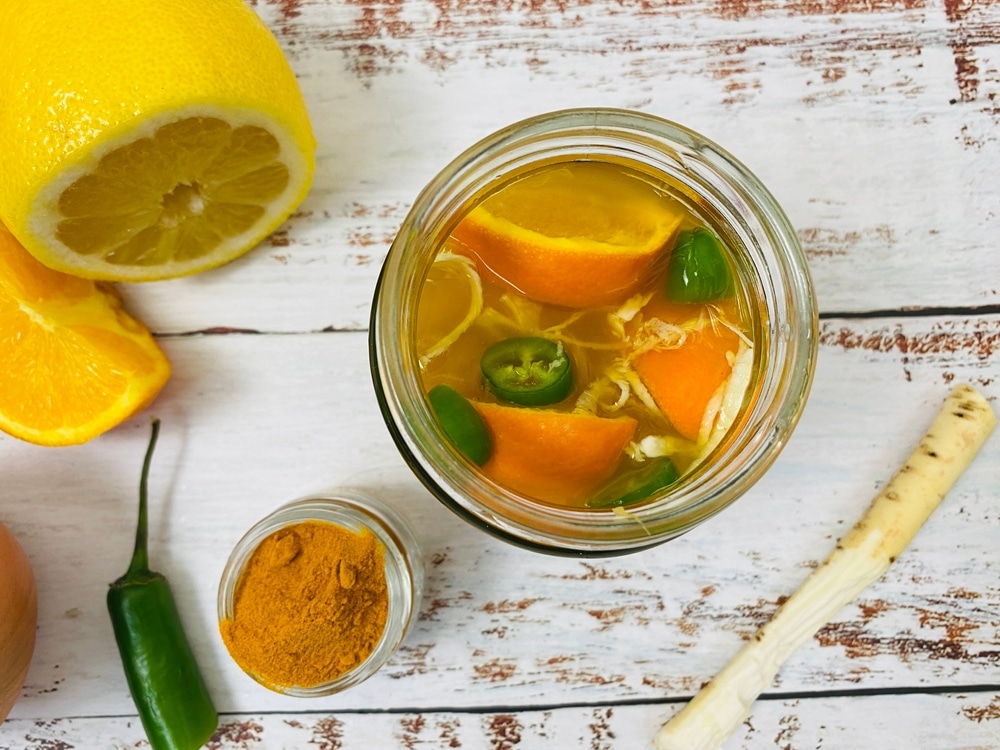
As any parent knows, when the first cold snap of autumn hits, the “germ season” countdown begins. For years, I searched for a natural way to support my family’s immune systems that didn’t involve sugary store-bought syrups. That search led me to an unconventional, zesty, and powerful tonic known as fire cider. While the idea of steeping spicy peppers and pungent garlic in vinegar might sound like a kitchen experiment gone wrong, this traditional herbal remedy has become the “secret weapon” in our pantry. It’s a punchy, sweet, and savory infusion that wakes up your senses and keeps your household resilient through the winter months.
What is Fire Cider?
At its core, fire cider is an oxymel—a traditional herbal preparation made of vinegar and honey. This specific blend was popularized in the 1970s by legendary herbalist Rosemary Gladstar and has since been adapted by home cooks everywhere. The classic base usually consists of “The Big Five”: garlic, onions, ginger, horseradish, and hot peppers, all steeped in raw apple cider vinegar.
As a parent, I’ve learned that customization is key. While horseradish is incredible for clearing out stubborn sinus congestion, it can be a bit intense for younger palates. I often swap it for echinacea root to keep the immune-boosting benefits while mellowing the “kick.” You can also get creative with what’s in your crisper drawer. Adding fresh turmeric provides anti-inflammatory benefits, while slices of lemon or sprigs of rosemary and thyme add antimicrobial properties and a brighter flavor profile. The honey added at the end is the real magic—it mellows the acidity of the vinegar, making it palatable even for picky eaters.
How to Use Fire Cider
Don’t let the name scare you; you don’t have to drink it by the cupful. Because it is essentially a potent, infused vinegar, it is incredibly versatile in the kitchen. Here are the best ways to incorporate it into your family’s routine:
- The Daily Tonic: Take a single tablespoon each morning as a preventative measure during flu season.
- The Recovery Boost: If you feel a tickle in your throat, increase your intake to a teaspoon every few hours, or stir a tablespoon into a mug of warm water with an extra squeeze of lemon.
- Culinary Flair: Use it anywhere you would use regular vinegar. It makes a phenomenal base for a salad vinaigrette or a tangy dip for crusty sourdough bread when mixed with high-quality olive oil.
- Kitchen Shortcut: Use it as a quick marinade for chicken or stir it into a pot of soup right before serving to brighten the flavors.
How to Ferment Fire Cider
Making your own batch of fire cider is an exercise in “slow living.” It’s a simple process of assembly followed by patient waiting. While some people prefer to keep their jars in a dark cupboard, placing yours in a warm, sunny window can actually help speed up the infusion process, drawing the medicinal properties out of the roots and herbs more effectively.
To start your batch:
- Pack a quart-sized glass jar with your chopped aromatics: onion, garlic, ginger, echinacea (or horseradish), orange slices, and a jalapeño for heat.
- Submerge the ingredients completely in raw apple cider vinegar. Pro tip: use a glass fermentation weight to keep the vegetables from floating, which prevents mold growth.
- Seal the jar (if using a metal lid, place a piece of parchment paper between the jar and the lid to prevent the vinegar from corroding the metal). Let it sit for 2 to 4 weeks, giving it a gentle shake every day.
- Strain the mixture through cheesecloth, squeezing out every last drop of the infused liquid.
- Whisk in an equal amount of raw honey to the strained liquid. You can also add a pinch of cayenne pepper at this stage if you want more heat.
- Store the finished cider in the fridge; it will stay potent for months.
Leftover Fire Cider Chutney
One of the best “zero-waste” tips I’ve learned is to never throw away the solids after straining your cider. Those bits of ginger, garlic, and onion are now pickled and packed with flavor. You can pulse these leftovers in a food processor to create a “fire chutney.” This spicy, tangy relish is delicious served over a bowl of rice and beans, stirred into a hearty stew, or even spread on a savory breakfast toast. It’s a great way to ensure none of those expensive organic ingredients go to waste.
Whether you follow a strict recipe or toss in whatever herbs you have on hand, the goal is the same: creating a traditional, hand-crafted remedy that supports your family’s wellness.
Note: This content has been reviewed for general accuracy by medical professionals; however, it is not intended as personal medical advice. Always consult with your healthcare provider or a pediatric specialist before introducing new herbal supplements into your family’s diet, especially for children under one year of age (who should not consume honey).