

















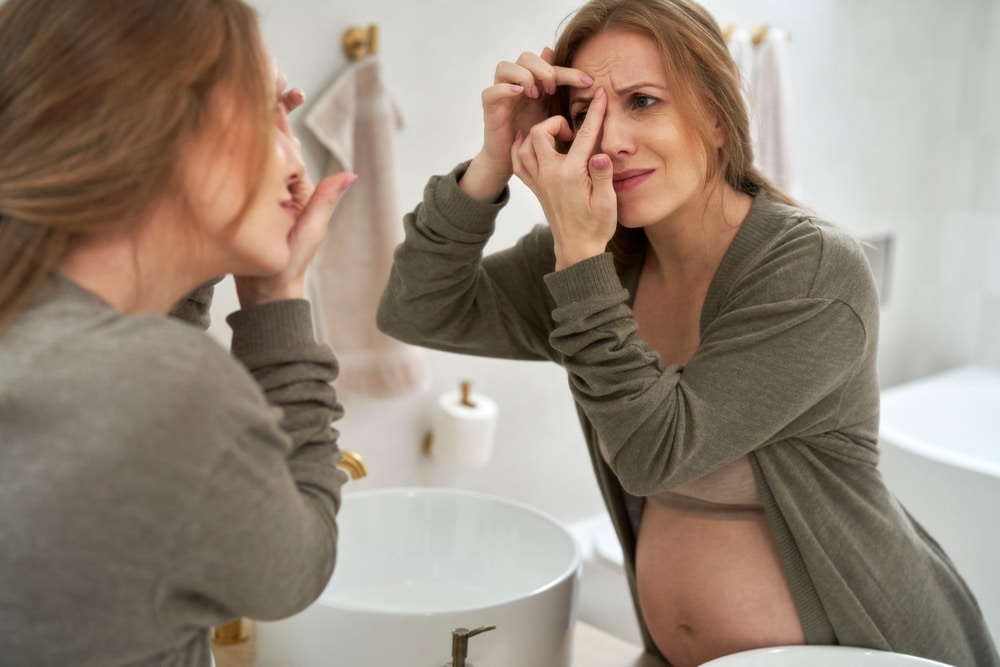
While many expect the legendary “pregnancy glow,” the reality for nearly half of expectant parents is a sudden and frustrating flare-up of acne. If you are currently staring at a cluster of deep, painful breakouts in the mirror, you are part of the 43% of people who experience skin revolts during gestation. It can feel like a cruel irony: while you are doing the hard work of growing a human life, your skin is busy staging a full-scale uprising.
The good news, according to dual board-certified dermatologist Dr. Aegean H. Chan, is that you don’t have to suffer in silence until your due date. Managing pregnancy acne is entirely possible; it simply requires a shift in strategy to keep both you and your baby safe.
Why Pregnancy Acne Hits Different
The culprit behind this skin transformation is primarily hormonal. During pregnancy, your body is flooded with progesterone and other androgens. While these hormones are vital for maintaining a healthy pregnancy, they also act as a “green light” for your sebaceous glands.
When these glands receive the signal, they ramp up oil production significantly. This excess sebum mixes with shedding skin cells, creating the perfect environment for clogged pores and bacterial growth. If you have a history of hormonal acne—especially those stubborn breakouts that used to appear along your jawline during your period—your skin is likely more sensitive to these shifts. Research shows that about 90% of those struggling with pregnancy breakouts had some history of acne before their positive pregnancy test.
When Does Pregnancy Acne Start and When Can It Get Better?
The first trimester is often the most tumultuous for the skin. This is when human chorionic gonadotropin (hCG) and progesterone levels skyrocket, coinciding perfectly with morning sickness and fatigue. For many, this “hormonal storm” peaks in the first and second trimesters.
While some lucky individuals see their skin clear up in the third trimester as hormones begin to plateau, others may find that the breakouts persist until delivery. It is a highly individual experience, influenced by your unique genetic makeup and how your body processes the surge of endocrine changes.
What Pregnancy Acne Actually Looks Like
Pregnancy acne isn’t usually characterized by simple blackheads. Because it is driven by internal hormonal shifts, it often manifests as deep, tender nodules or “blind” pimples—cysts that sit far beneath the skin’s surface.
You might also find that the “acne zone” expands. It is very common for pregnancy breakouts to migrate beyond the face to the chest, back, and shoulders. The lower third of the face, particularly the chin and jawline, remains a hotspot, but because oil glands are active all over the body, the “bump” itself or even your neck can occasionally see some congestion.
What Actually Works and What’s Safe
There is a common misconception that because you are pregnant, you must abandon all effective skincare. Dr. Chan emphasizes that you don’t have to “wait it out.” Several ingredients are both clinically effective and recognized as safe for use during pregnancy.
Azelaic Acid
This is often considered the “gold standard” for pregnancy-safe acne care. Azelaic acid is a multi-tasker: it kills acne-causing bacteria, reduces inflammation, and—perhaps most importantly for pregnant people—helps fade the dark spots (post-inflammatory hyperpigmentation) that breakouts leave behind. It is gentle enough for skin that has become sensitized by pregnancy.
Gentle Alpha Hydroxy Acids (AHAs)
Exfoliation is key to preventing the “clogged pipe” effect in your pores. Lactic acid and mandelic acid are excellent choices because they have larger molecular sizes, meaning they don’t penetrate as deeply or cause as much irritation as other acids. Low concentrations of glycolic acid (typically under 10%) are also widely considered safe by dermatologists.
Benzoyl Peroxide and Salicylic Acid Cleansers
While high-concentration, leave-on salicylic acid treatments are generally avoided, using a wash-off cleanser containing these ingredients is typically low-risk. Because the product is only on your skin for a minute before being rinsed away, systemic absorption is negligible.
Sulfur
It may have a distinct, slightly earthy scent, but sulfur is a fantastic natural antibacterial and anti-inflammatory agent. It helps “dry out” surface-level congestion without the harshness of more aggressive chemicals.
For Severe Cases
If your acne is widespread or causing physical pain, do not hesitate to see a professional. Doctors can prescribe pregnancy-safe oral antibiotics like erythromycin. Additionally, localized steroid injections can be used in-office to shrink large, painful cysts quickly, providing relief without systemic risk.
What to Absolutely Avoid
Safety is the priority, and several common acne treatments are strictly off-limits due to their potential impact on fetal development:
Retinoids
Whether it’s over-the-counter retinol or prescription-strength Tretinoin and Accutane, all Vitamin A derivatives should be stopped immediately. These are linked to significant birth defects.
Tetracycline Antibiotics
Medications like doxycycline or minocycline can interfere with the development of a baby’s bones and teeth, often causing permanent discoloration.
Spironolactone
This popular hormonal acne medication is a strict “no” during pregnancy as it can interfere with the normal development of male fetuses.
Bakuchiol
While marketed as a “natural retinol alternative,” Dr. Chan notes that we simply don’t have enough data to confirm its safety in pregnancy. It is better to stick with ingredients like azelaic acid that have a proven safety record.
A Simple Pregnancy-Safe Routine
You don’t need a ten-step process to get results. In fact, simpler is often better when your skin is already reactive.
Morning: Start with a gentle benzoyl peroxide cleanser to kill bacteria. Apply an azelaic acid treatment, followed by a fragrance-free moisturizer and a mineral-based (zinc oxide) sunscreen.
Evening: Use a mild, hydrating cleanser to remove the day’s grime. Apply a lactic acid or PHA exfoliant two to three times a week to keep pores clear, followed by a nourishing moisturizer to support your skin barrier.
The Emotional Piece Matters Too
It is okay to be upset about your skin. Between the body changes, the fatigue, and the preparation for a new family member, feeling like you don’t recognize yourself in the mirror can take a heavy emotional toll. Acne is not a vanity issue; it is a medical condition that affects your confidence. Seeking help from a dermatologist early can save you months of frustration and prevent long-term scarring.
Summary
Pregnancy acne is a temporary but challenging side effect of the incredible work your body is doing. By focusing on safe, anti-inflammatory ingredients like azelaic acid and gentle AHAs, and avoiding high-risk retinoids, you can manage breakouts effectively. Remember that your skin’s current state is a reflection of a hormonal season, not a permanent change, and there are plenty of resources available to help you feel like yourself again.