
















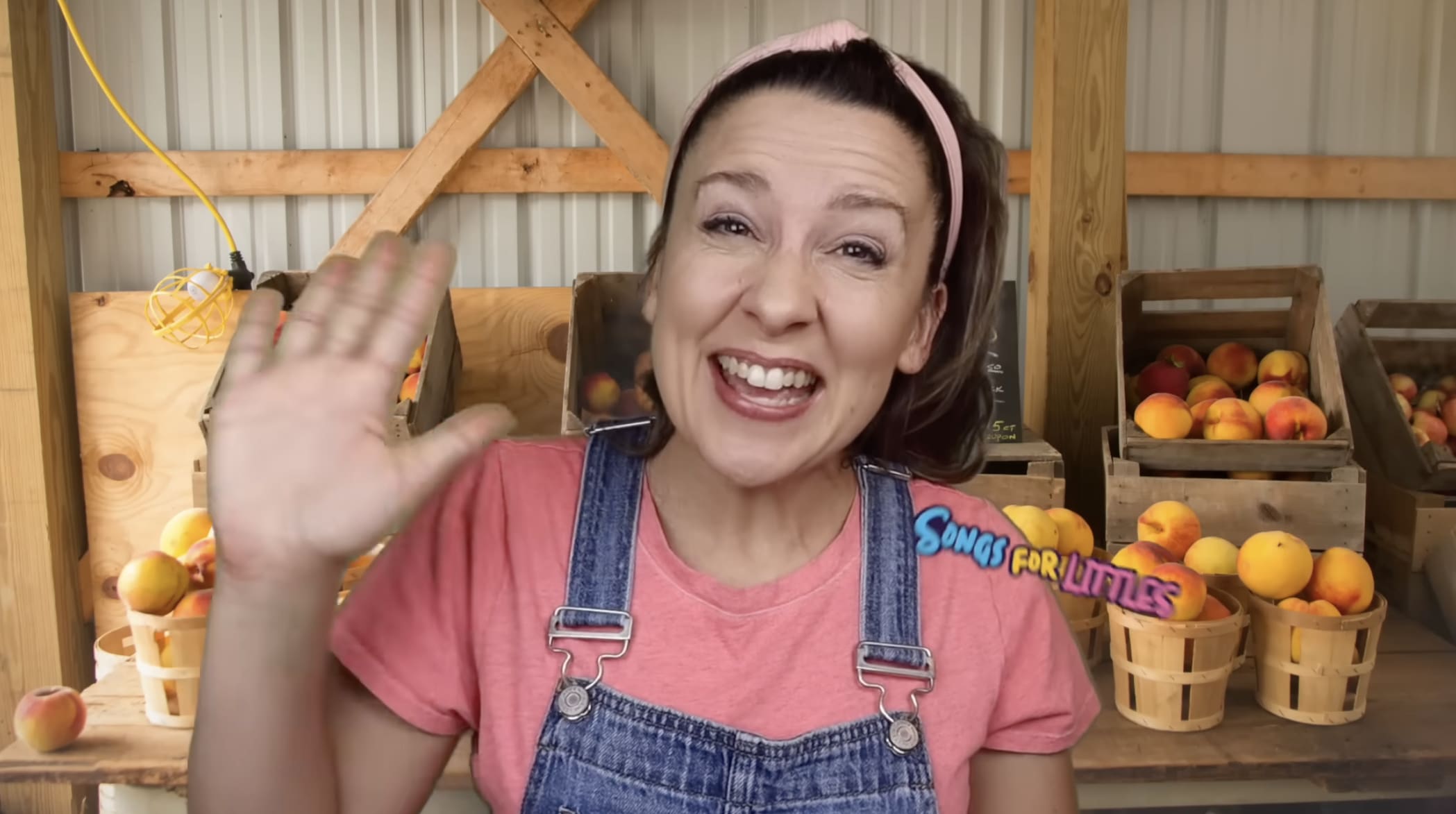
Most parents recognize the bright headbands and encouraging voice of Rachel Griffin-Accurso, known globally as Ms. Rachel. Yet, behind the toddler-focused videos lies a personal history shaped by economic hardship. Growing up with a single mother who balanced daycare shifts, weekend work at Pizza Hut, and night school, Rachel remembers the sting of scarcity. She often speaks of her Walmart sneakers—a necessity that led to teasing at school but now serves as a catalyst for her advocacy.
Today, she uses her massive platform to bridge the gap for families facing similar struggles. With one in five American children relying on SNAP benefits, Rachel’s mission transcends basic ABCs; she is fighting for the foundational needs of every child, proving that her role as an educator is inextricably linked to social activism.
The question that started everything
Empathy often begins with a simple realization of unfairness. For Rachel, that moment came as a young girl when she asked her mother why some children didn’t have enough to eat. It wasn’t a question of supply, but of priority—a realization that in a nation of plenty, hunger is a systemic choice rather than an inevitability.
Now, history is repeating itself through the eyes of her seven-year-old son, Thomas. He grapples with the same confusion, wondering why basic necessities aren’t a universal guarantee. The difference today is that Rachel has the influence to answer those questions with action. By normalizing the conversation around food insecurity, she is teaching a new generation that questioning the status quo is the first step toward changing it.
What she’s hearing from families right now
Rachel’s connection to her audience goes deeper than screen time. She serves as a confidante for parents who are drowning in the skyrocketing costs of childcare and the “food versus rent” trade-offs. The reality is stark: when high-quality childcare consumes a majority of a household budget, nutrition often becomes the first sacrifice.
In her conversations with families, Rachel is adamant about stripping away the stigma associated with social safety nets. She speaks openly about her own childhood reliance on programs like PBS and SNAP, reframing them not as “handouts,” but as the essential infrastructure that allowed her family to survive. For Rachel, children’s rights—including access to healthcare and healthy food—are non-negotiable pillars of a functional society.
The partnership putting resources where they’re needed most
Leveraging her background (a master’s in early childhood education and two decades of teaching), Rachel carefully selects partnerships that provide tangible relief. Her collaboration with Stonyfield Organic for the “O is for Organic” initiative is a prime example, resulting in a significant $200,000 donation to organizations that support family wellness.
One recipient, Room to Grow, focuses on the critical developmental window from pregnancy to age three. By providing families with a “free shop” for essentials and connecting them to SNAP resources, the organization mirrors Rachel’s belief that the earliest years dictate a child’s trajectory. During this work, Rachel shared a profound insight for the modern parent: many mothers feel they lack a “village” to help them, yet they are working so hard for their children that they have *become* the village themselves.
Another partner, No Kid Hungry, addresses the immediate threat of reduced SNAP funding. Rachel emphasizes that nutrition is not just about a full stomach; it is the fuel required for the brain development and learning capacity that her educational content aims to support.
Teaching the next generation to care (without falling apart)
One of the greatest challenges for modern parents is discussing heavy social issues without inducing anxiety in their children. Rachel admits she isn’t a “perfect” parent and frequently turns to experts like Dr. Becky Kennedy for guidance on age-appropriate honesty.
Her approach with her son, Thomas, is grounded in the philosophy of Mr. Rogers: look for the helpers and lead with love. She explains inequality as a “wrong” that needs “righting,” allowing him to participate in small acts of service, like choosing toys for children in local shelters. By showing him that his mother works not just for fame, but to help kids in need, she is modeling a life of purpose.
Rachel’s journey from the girl in the Walmart sneakers to a national advocate for children’s rights serves as a powerful reminder for all parents. She has transformed her childhood “scarcity” into a legacy of “abundance,” ensuring that the families watching her videos feel seen, supported, and empowered to ask for the help they deserve. Through her work, she isn’t just teaching toddlers to talk; she is teaching a nation how to care for its most vulnerable members.