



















The loss of a parent often leaves behind a trail of unanswered questions, but when that loss is sudden and preventable, those questions turn into a lifelong mission. My father was a man who believed that if he didn’t acknowledge a problem, it couldn’t touch him. He navigated decades of digestive issues with a stoic “what I don’t know won’t hurt me” attitude. It was a philosophy that failed him when he was hospitalized at 65. Seven weeks after that initial call, he was gone, taken by a colon cancer that had likely been growing in silence for years.
His passing wasn’t just a personal tragedy; it was a wake-up call. I realized that my father’s “strength” was actually a dangerous form of avoidance—one that many of us, especially busy parents, often replicate. We tell ourselves we’re just tired because of the kids or that our digestive shifts are just stress. But as I’ve learned, the “shadow” of risk doesn’t disappear just because we look away.
The statistics are revealing (and disheartening)
We are currently witnessing a shift in the landscape of oncology. The recent news of actor James Van Der Beek’s colorectal cancer diagnosis at age 47 has put a spotlight on a trend that pediatricians and GPs have been quietly tracking for years: early-onset colorectal cancer is on the rise. According to the American Cancer Society, diagnoses in adults under 50 have been climbing by roughly 2% annually since the mid-1990s. It has officially become the leading cause of cancer death for men under 50 and the second leading cause for women in that same age bracket.
The tragedy in these numbers lies in how preventable this specific cancer is. When caught early through routine screening, the five-year survival rate is a staggering 90%. The CDC suggests that if we could get 80% of the eligible population screened, we could reduce deaths by a third by the end of this decade. Screening isn’t just about finding cancer; it’s about finding polyps—small growths that can be removed before they ever have the chance to turn malignant.
Take the story of Sarah Beran, a mother of two who was diagnosed at just 34. Like many parents, she chalked her exhaustion up to the grind of raising a three-year-old and a five-year-old. When she finally noticed blood in her stool, her concerns were initially dismissed because of her age. It took her own fierce advocacy—and showing her doctor photographic evidence—to get the colonoscopy that revealed a mass and over 100 polyps. Her journey involved 12 rounds of chemotherapy and multiple surgeries. Today, she is cancer-free and works to ensure other parents don’t have to fight the same uphill battle for a simple test.
The system isn’t structured for your benefit
The most frustrating barrier to early detection is the medical-industrial complex itself. Standard insurance guidelines typically don’t cover routine colonoscopies until age 45. For those of us in our 30s or early 40s, this creates a dangerous “no-man’s-land” where we are old enough to develop polyps but too young for the “system” to care.
When I sought a referral at 43, I was met with bureaucratic resistance despite my family history. This is where parenting instincts must kick in—not just for our children, but for ourselves. We are taught to advocate for our kids at school and at the pediatrician’s office, yet we often fail to apply that same tenacity to our own health. If you are under 45 and feel something is wrong, the “wait and see” approach is a gamble you don’t have to take.
Steps to secure earlier screening
If you have symptoms or a family history, you may need to push back against insurance denials. Having a first-degree relative with the disease significantly elevates your risk, and this should be your primary leverage in medical conversations.
Listen to the subtle signals your body sends. It’s not always dramatic pain. Sarah Beran noted that her “parenting fatigue” was actually a symptom of the cancer lurking within. Other red flags include a sudden change in bowel habits—specifically stools that become thinner or more frequent—and unexplained weight loss or blood. If a doctor dismisses you because “you’re too young,” it might be time to find a new doctor.
Colonoscopy preparation (not fun, but necessary)
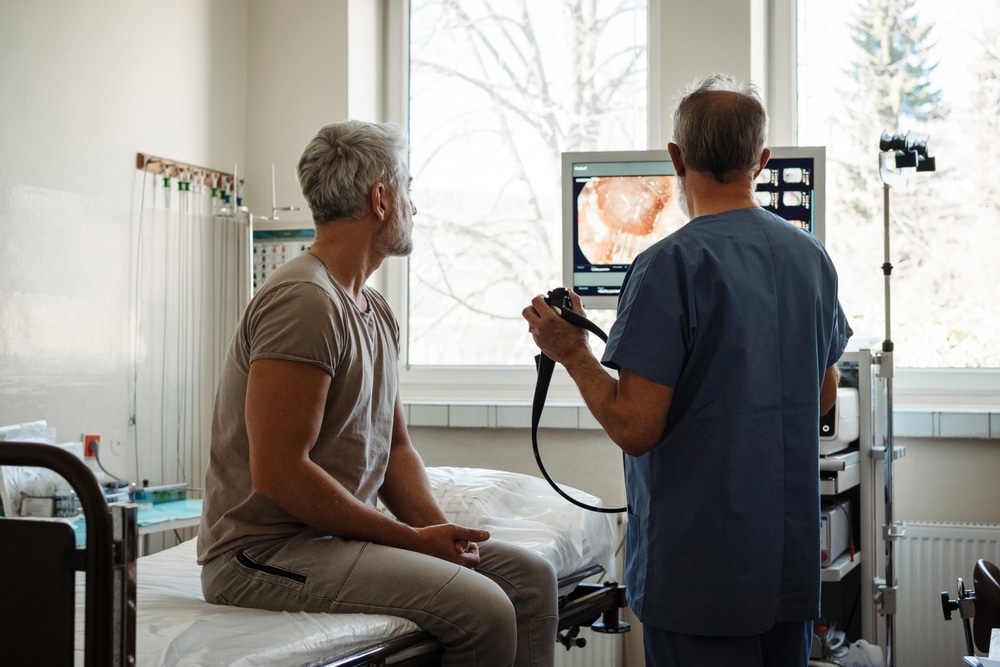
The procedure itself is often described as the best nap you’ll ever have, but the “prep” day is the hurdle everyone fears. As a parent who has navigated this, I can tell you that strategy is everything.
First, the liquid diet: avoid red or purple dyes, as they can mimic the appearance of blood during the scope. Clear apple juice, white grape juice, and light-colored gummy bears (to satisfy the need to chew) are your best friends. Many people find that drinking the prep solution through a straw helps it go down faster.
Timing is also key. If possible, schedule your procedure for the late morning. An 8:00 AM appointment sounds efficient, but it requires you to finish your final “flush” in the middle of the night. A 10:30 AM or 11:00 AM slot allows for a more human wake-up time. And realistically, pick a day when you don’t have to be “on” for the kids. If you can, schedule it on a rainy Tuesday in November when you won’t feel like you’re missing out on life.
Changing perceptions
One of the biggest hurdles to screening isn’t the drink or the doctor; it’s the stigma. We live in a culture that is comfortable talking about pink ribbons and breast health, but we shy away from anything involving the colon or rectum. This silence is lethal.
Advocates like Beran are trying to change this by launching brands like Worldclass, which creates high-end streetwear designed to spark conversations about colon health. The goal is to move the colonoscopy out of the “embarrassing medical procedure” category and into the “routine self-care” category. If we can talk about our skincare routines or our gym splits, we can certainly talk about a 15-minute procedure that prevents cancer.
Essential takeaways
The reasons behind the rise in early-onset colorectal cancer are still being debated—diet, microplastics, and sedentary lifestyles are all suspects—but the solution remains clear. We have to be the gatekeepers of our own longevity.
My father’s story didn’t have to end at 65. If he had embraced screening instead of avoidance, he might have seen my children grow up. The legacy of his loss is my commitment to the “gentle flush and a nap” every five years.
The prep is a temporary inconvenience. The alternative—leaving your children to navigate life without you—is an unbearable burden. Trust your gut, demand the test, and remember that being a good parent starts with making sure you’re still around to do the job. After you finish your screening and get that clean bill of health, go ahead and book that facial or round of golf. You’ve earned the right to keep living your life to the fullest.
In the end, the most profound act of love you can show your family isn’t a gift or a vacation—it’s taking care of the health that allows you to stay by their side. Don’t let the fear of a temporary discomfort prevent a lifetime of memories. Be proactive, be vocal, and get screened.