




















Most women share a silent, internalized ritual. It’s the sound of car doors locking the second you sit down, the feeling of cold metal keys gripped between your knuckles as you cross a parking lot, and the habit of keeping one earbud out while running so you can track the footsteps behind you. We have been conditioned to live in a state of constant, low-level preparation for the worst-case scenario. We learn how to fight back, how to scream, and how to use pepper spray.
But what if the most powerful tool for our safety isn’t a weapon or a self-defense move, but a return to the instincts we’ve been socialized to ignore? Most safety training focuses on what to do when a situation turns violent. Kelly Sayre, a threat assessment expert and founder of The Diamond Arrow Group, realized early in her career that we were missing the most critical window: the moments before a situation ever escalates. The goal isn’t just to survive an encounter; it’s to notice the “glitch in the matrix” early enough to never be in the encounter at all.
The skill you already have
Situational awareness is often framed as a tactical, military-style skill, but Sayre argues it is actually a deeply feminine strength. Women are naturally attuned to shifts in environment. We are the masters of reading the room, noticing micro-expressions in our children, and sensing when a partner’s mood has shifted before they even speak. However, we are rarely taught to apply those same high-level observational skills to our own personal safety.
The biggest hurdle is distinguishing between worry and intuition. Worry is a cognitive loop—it’s the “what if” that creates anxiety about the future. Intuition, however, is biological. It is your body’s internal radar reacting to real-time data. It’s that prickle on the back of your neck or the sudden urge to take a different route home. Sayre notes that intuition is never a prankster; it is always responding to something real, even if your logical brain hasn’t processed it yet.
The tragedy is that women are often socialized to prioritize politeness over this intuition. We stay in uncomfortable conversations because we don’t want to be “rude.” We ignore a “creepy” feeling because we don’t want to seem “judgmental.” Reclaiming our safety means giving ourselves permission to trust that gut feeling without needing a logical justification for it.
Closer to home
While the media often focuses on “stranger danger” in dark alleys, the reality of women’s safety is much more complex. Statistically, the greatest threats often come from people within our own social circles—acquaintances, colleagues, or partners. This is where situational awareness evolves from scanning a room to scanning a relationship for patterns.
A predatory individual rarely starts with violence; they start with “boundary testing.” They might make an inappropriate joke to see if you’ll laugh it off, or stand just a little too close to see if you’ll move. Sayre points out that how a person reacts when you set a small boundary tells you everything you need to know. A person with good intentions will apologize and back off when told they’ve made you uncomfortable. A person with ill intentions will push back, minimize your feelings, or try to make you feel guilty for speaking up. Recognizing these red flags early is the ultimate form of self-defense.
What this means for our daughters
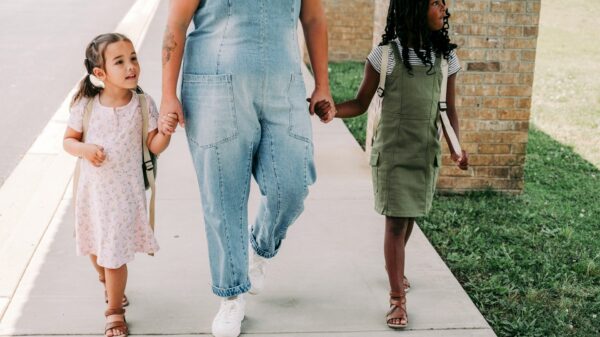
As parents, we have a unique opportunity to break the cycle of “politeness over safety.” For generations, girls were taught to “give a hug” to relatives they didn’t want to touch or to “be nice” to everyone. These social contracts effectively dull a girl’s natural “sharpness.” To protect our daughters, we must validate their right to say no and their right to be “difficult” when their boundaries are crossed.
Safety training for the next generation shouldn’t be rooted in fear, but in empowerment. It’s about teaching them that their body belongs to them and that their internal “uh-oh” feeling is a superpower, not a nuisance. When a child tells you they don’t feel comfortable around someone, believe them. By honoring their small boundaries now, we give them the confidence to enforce life-saving boundaries later.
The simplest place to start
If you want to improve your situational awareness today, start with “transition areas.” These are the spaces where we are most vulnerable because our minds are already at our destination—walking from the grocery store to the car, or from the office to the train. Put the phone away. Take your chin off your chest. Simply looking around and acknowledging your surroundings makes you a “hard target.”
Predators look for people who are distracted or who look like they won’t make a scene. By making brief eye contact with those around you, you signal that you are aware, present, and not someone who can be taken by surprise. If direct eye contact feels too confrontational, Sayre suggests looking at a person’s eyebrows; it conveys the same message of awareness without the intensity of a stare-down.
Ultimately, situational awareness isn’t about living in fear—it’s about living in reality. It’s about knowing that you have the right to occupy space, the right to leave a situation that feels “off,” and the right to prioritize your own safety over anyone else’s comfort. We are all born with the instincts to protect ourselves; we just have to give ourselves permission to use them.
Closing Remark: True safety is found in the transition from being a passive observer of our lives to being an active participant in our own protection. By sharpening our intuition and teaching our children to do the same, we transform fear into a quiet, steady confidence that carries us through the world with our heads held high.