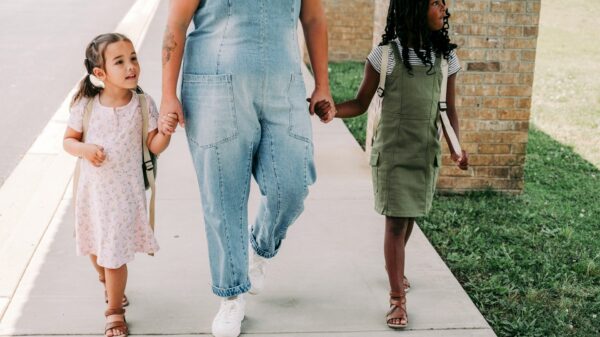





















Every parent of a preschooler knows the rhythmic, almost hypnotic cadence of the “Why?” phase. My three and five-year-olds are currently in the thick of it. Whether we are navigating the morning commute or sitting down for dinner, the questions are relentless. Sometimes, it feels like a genuine quest for knowledge; other times, it feels like a competitive sport designed to see who can exhaust Mom first.
There are moments when I meet their curiosity with a smile and a thoughtful explanation. There are other moments—usually when I’m running on four hours of sleep and a cold cup of coffee—where the urge to snap “Because I said so!” is overwhelming. But more often than not, when I hit a wall and admit I don’t have the answer, I’m met with their own imaginative theories. In those moments, I realize they aren’t looking for a Wikipedia entry; they are looking for a connection.
The Echo of a Silent Childhood
The reason I put so much energy into answering those “whys” is that I remember the alternative. I grew up in an environment where questions were often viewed as a challenge to authority rather than an expression of wonder. In my childhood home, the hierarchy was clear: adults held the knowledge and the power, and children were expected to follow suit without seeking the “reasoning” behind the rule.
This lack of transparency was compounded by an underlying sense of unpredictability. The emotional climate of my home shifted like the weather, influenced by my parents’ moods and conflicts. I became an expert at reading the room before I even learned to read a book. To stay safe and keep the peace, I adopted a persona of the “easy” child—quiet, agreeable, and hyper-aware of everyone’s needs but my own.
When Achievement Becomes a Shield
As I transitioned into adulthood, the survival skills I developed as a child morphed into what the world calls “success.” Perfectionism gave me a sense of control in a chaotic world. People-pleasing ensured I was never the source of conflict. High achievement provided a steady stream of external validation that filled the void where self-worth should have been.
On paper, I was thriving. I had the grades, the career, and the reputation for being “the one who has it all together.” But internally, I was running on empty. I had mastered the art of suppressing my own stress and emotions to maintain the facade of the high-performer. It wasn’t until my body began to protest through physical health issues that I realized these weren’t just “good traits”—they were deeply ingrained coping mechanisms that kept me disconnected from my true self.
The Trap of the “Perfect Mother”
When I became a mother, I initially brought that same perfectionism to my parenting. I believed that being a “good mom” meant never losing my cool, always having the right educational toy ready, and maintaining a Pinterest-perfect household. I viewed my children’s big emotions or repetitive questions as a test of my competence. If I stayed calm, I was winning; if I felt frustrated, I was failing.
This was just perfectionism in a new, more exhausting outfit. Motherhood isn’t a performance; it’s a relationship. And in any real relationship, there will be friction, exhaustion, and mistakes. The breakthrough came when I realized that my children didn’t need a perfect mother—they needed a present one who was willing to own her humanity.
The Power of the Emotional Repair
Now, instead of striving for a 100% calm rate, I focus on the “repair.” When I lose my patience because I’ve been asked to find a lost shoe for the tenth time, I don’t just move on in shame. I circle back. I get down on their level and apologize. I explain that while I was frustrated, it wasn’t their fault that I raised my voice, and I tell them how I plan to handle my feelings better next time.
This process of repair is the cornerstone of “reparenting.” It teaches my children—and reminds me—that love isn’t conditional on “getting it right.” It demonstrates that conflict isn’t the end of a relationship; it’s an opportunity to build a stronger bridge. By allowing them to see my mistakes and my efforts to fix them, I am giving them permission to be imperfect too.
Ultimately, my goal isn’t to raise children who are the most “obedient” or the highest achieving. I want to raise humans who are kind, curious, and deeply anchored in their own voices. Every “why” I answer, even the ones that come at 6:00 AM, is a small investment in their belief that their voice matters. I am learning that the real work of parenting isn’t found in the highlight reels, but in the quiet, messy, and repetitive moments where we choose connection over control.
Closing Remark: Reparenting is a journey that doesn’t have a final destination; it is found in the daily decision to break generational cycles and choose empathy over ego, ensuring our children grow up in a world where their curiosity is celebrated rather than suppressed.