



















If you’ve ever lived through a northern winter, you know that January 1st is a bit of a marketing myth. In places like Vermont, the new year arrives in a shroud of darkness and bone-chilling cold. The ground is iron-hard, the sun disappears before the kids are even home from school, and your bank account is likely recovering from the December blitz. It is a time for hibernation and survival, not for the ambitious “new year, new me” transformations we are sold. Attempting a total life overhaul when the air literally hurts your face feels less like a fresh start and more like an uphill climb through deep slush.
January has never fooled me
I have never quite bought into the January reset. For parents, trying to launch a new fitness regime or a rigorous organizational system in the dead of winter is counter-intuitive. If the natural world is dormant, why are we expected to be in full bloom? For those of us raising families, the real “turning of the year” has always happened in late August or early September.
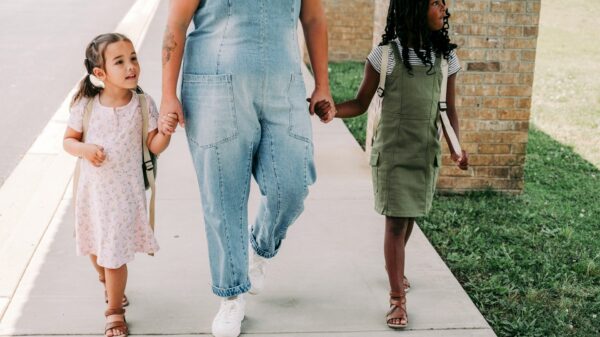
The back-to-school season carries a unique electricity. It’s the scent of unsharpened pencils, the crispness of new sneakers, and the collective sigh of a household returning to a predictable rhythm. Yes, the transition is chaotic—there are endless forms to sign, lost water bottles to hunt down, and the inevitable morning friction over wearing actual clothes instead of pajamas. But beneath that chaos is a genuine sense of a clean slate. It is the moment we get to recalibrate the goals that likely fell by the wayside during the unstructured heat of July.
From my current vantage point—with one child in college and another navigating high school—I can promise those in the “sock war” phase that this rhythm evolves. The frenetic energy of early childhood eventually gives way to a quieter, more reflective independence. You eventually move from being the manager of every minute to the observer of their growth. And in that transition, I’ve found that September offers a specific kind of wisdom that January never could.
The case for a fifth season
It turns out there is a traditional framework for this mid-transition feeling. In many ancient wisdom traditions, including Chinese medicine, there isn’t just four seasons; there is a fifth. This “Late Summer” period—that golden window in September when the humidity breaks but the frost hasn’t yet bitten—is considered the most crucial time for grounding. It is the center point of the year’s wheel.
Leda Elliott, author of The Five Seasons Method, points out that this season is governed by the element of Earth. Its superpower is intention. When we are aligned with this season, we feel centered and capable of focus. When we aren’t, our minds tend to scatter like dry leaves in a windstorm. If you’ve ever found yourself standing in the school-supply aisle feeling a sudden, inexplicable surge of panic over glue sticks, you’ve felt that lack of grounding.
For parents, the pressure of September often manifests as “expectation bloat.” We want the perfect teacher, the right extracurriculars, and the most efficient family calendar. But the wisdom of the fifth season suggests that the most productive thing we can do is actually the opposite: let go. By releasing the rigid expectations of how the school year *should* look, we become the steady, grounded anchor our children need as they navigate their own transitions.
Two ways to come back to earth
Finding that stability doesn’t require a weekend retreat or a complex meditation practice. It’s about small, physical cues that tell your nervous system you are safe and present. Elliott suggests two simple methods that are particularly effective for parents who feel like they are “vibrating” with stress.
The first is literal grounding. It sounds overly simple, but lying flat on the floor—or better yet, on the grass—for even thirty seconds can reset your internal clock. It’s about letting the earth take the weight you’ve been carrying. While children do this naturally (think of a toddler’s “active rest” on the rug), adults often resist the urge to just stop. Giving yourself permission to be held by the ground, even briefly, can break the cycle of frantic multitasking.
The second technique is what Elliott calls the “Buzzy Belly.” Most parents carry their stress in their chest or shoulders, white-knuckling their way through the morning drop-off. By placing a hand on your stomach and breathing deeply until your belly rises and falls, you shift out of “fight or flight” mode. If you feel tight or “clenched” in your midsection, a gentle tapping on the stomach can help release that stored tension until you feel a light, energetic “buzz.” It is a physical check-in: are you reacting to the day, or are you moving through it?
As we move through this “fifth season,” I’m choosing to skip the Pinterest-perfect organization charts and instead focus on being the calm center of the storm. The true reset isn’t about becoming a different person in the middle of a blizzard; it’s about standing in the golden light of September, feet firmly planted, and being fully present for the people who are still walking out our doors and into the world.
Ultimately, the transition from summer to school is less about the supplies in the backpack and more about the state of the parent holding the door. This year, instead of sprinting into a new routine, I’m opting for the slow, intentional grounding that this season offers. My daughter gets her fresh start, and I get the peace of mind that comes from knowing that, no matter how fast the year turns, I am exactly where I need to be.